How to Build a Marketplace App Without a Technical Co-Founder
Step-by-step guide to scope, prompt, and ship a native iOS + Android marketplace MVP in days — not months.
By RapidNative
22nd Apr 2026
Last updated: 23rd Apr 2026

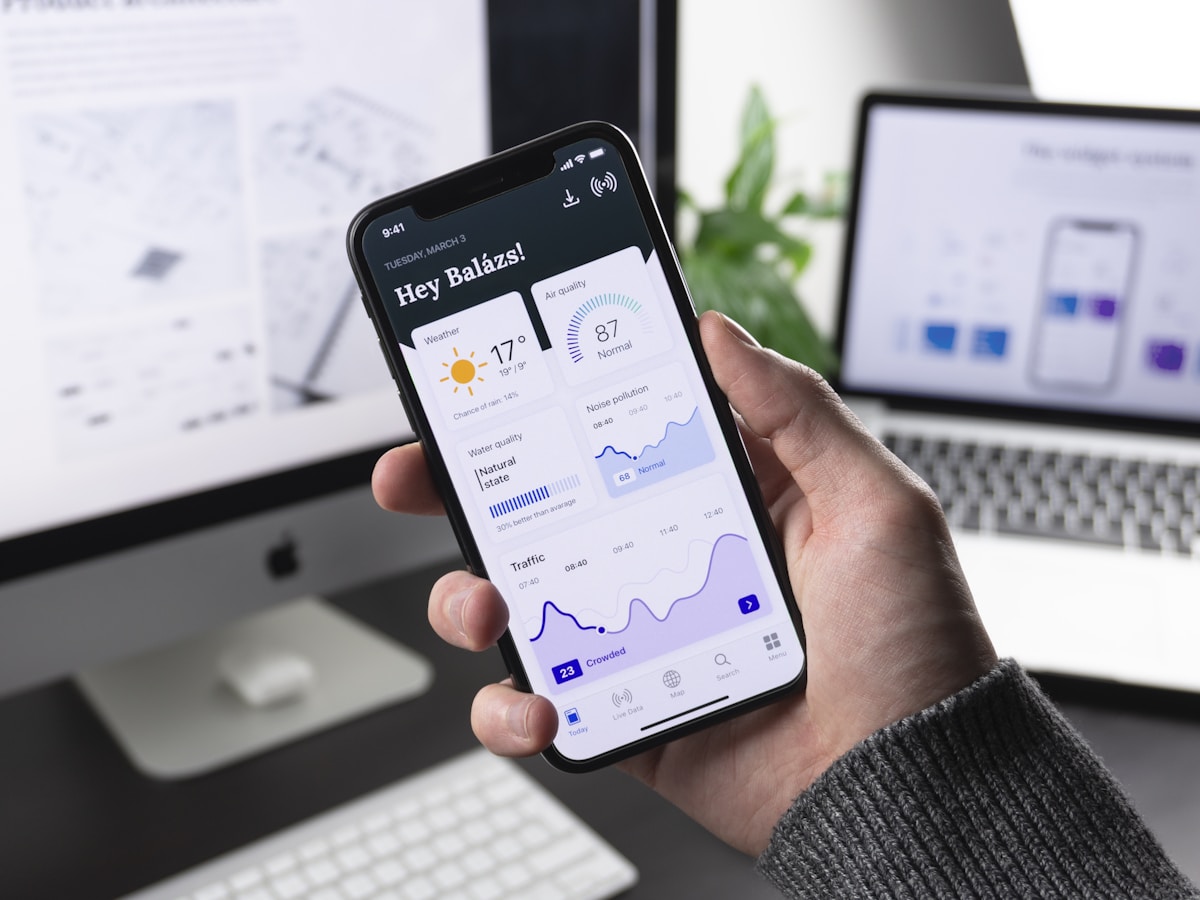
Photo by Annie Spratt on Unsplash
Most first-time founders with a marketplace idea hit the same wall: a development agency quotes $50,000–$200,000 and six to nine months for a basic two-sided app, and every pitch event in town is crowded with people searching for a technical co-founder to split equity with. In 2026, neither step is required to ship a working version. You can build a marketplace app without a technical co-founder, validate demand with real users, and keep full ownership of your company — provided you scope the MVP correctly and use the right AI-first stack.
This guide walks through exactly how to do it: what a marketplace MVP actually needs, which tools replace the work a technical co-founder would have done, and a step-by-step workflow for getting a native iOS and Android app in front of users within days instead of months.
Why solo founders get stuck hunting for a technical co-founder
Marketplace businesses — Airbnb, Uber, Etsy, Fiverr, StockX — all share the same structural problem: you have to build two products at once. Guests and hosts. Buyers and sellers. Drivers and riders. Each side has its own onboarding, dashboard, and trust requirements, plus a matching layer and payment splitting between them. That complexity is why agencies routinely charge $35,000–$70,000 for a functional marketplace MVP with search, listings, user accounts, and Stripe Connect integration, and why marketplace design costs exceed standard consumer apps.
Non-technical founders react to that price tag in one of three ways:
- They spend 6–18 months looking for a technical co-founder who will work for equity.
- They hire a freelance developer and end up 2–3x over budget because they can't write specs or review code.
- They shelve the idea.
There is now a fourth option, and it's the one that actually ships. AI-native app builders, no-code marketplace backends, and Stripe's multi-party payment rails have matured enough that a non-technical founder can own the entire stack themselves — and only bring in a technical co-founder after the marketplace has liquidity and revenue. That's a much better position to negotiate equity from.
What a marketplace MVP actually needs (and what it doesn't)
Before you build anything, you need to scope aggressively. A marketplace MVP is not a feature-complete product. It is the smallest thing that can prove both sides of your market will transact. According to most marketplace playbooks, four components are non-negotiable; everything else can wait.
A minimum viable marketplace has exactly four parts:
- Supply onboarding — how sellers, hosts, or providers list what they offer. For your first 20 listings, this can be a Typeform or even a DM. You don't need a seller dashboard on day one.
- Demand discovery — how buyers find those listings. A single scrollable list view with search by keyword is enough. Maps, filters, and recommendation engines are version two.
- Connection mechanism — how the two sides actually meet. In-app chat is nice, but email, SMS, or WhatsApp works until you prove people want to connect at all.
- Payment flow — how money moves from buyer to seller, minus your commission. Stripe Connect solves this with a few API calls and handles KYC, 1099s, and split payouts.
Everything else — reviews, ratings, advanced search, push notifications, referral programs, disputes, admin moderation tools — is a post-liquidity problem. You do not need those to ship. You need them to scale.
This scoping step is where most first-time founders lose six months. If you can't describe your MVP in those four lines, you're scoping version 3, not version 1.

The modern stack for solo founders building a marketplace app
Here's the actual toolchain that replaces the work a technical co-founder would have done. Each tool handles a specific slice of the problem, and they compose cleanly.
| Layer | What it does | What it replaces |
|---|---|---|
| AI mobile app builder (e.g., RapidNative) | Turns natural-language prompts into production React Native / Expo screens, exportable as native iOS and Android apps | A React Native engineer for UI work |
| Backend-as-a-service (e.g., Supabase, Firebase) | Database, auth, file storage, row-level security | A backend engineer for data plumbing |
| Stripe Connect | KYC, split payouts, escrow-like holds, 1099-K reporting | A payments engineer and compliance work |
| Sharetribe or similar | Pre-built marketplace logic: bookings, transactions, messaging | Months of marketplace-specific backend code |
| Expo EAS | Builds and submits native binaries to App Store and Google Play | A DevOps engineer for mobile release pipelines |
Notice what's missing from that list: there is no "CTO-level systems architect" step. The entire stack is built so that a product person can wire it together with config, prompts, and a few webhook URLs.
The native mobile piece is the one most solo founders get wrong. Most no-code marketplace advice assumes you're building a web app, but marketplace categories that rely on real-time interaction — on-demand services, local commerce, social marketplaces — need a mobile app to hit the engagement numbers that prove network effects. That's the gap an AI app builder closes.
Step-by-step: Build your marketplace app in days
Here's the workflow end to end. Plan on one focused week if you've already validated your idea, two weeks if you're validating as you build.
Step 1: Validate the two sides manually before you build anything
Before you open any builder, prove demand on both sides. This is the single most important step and it is free.
Run a smoke test: a landing page with a clear description of your marketplace, an email capture for each side, and a waitlist counter. Drive 200–500 targeted visitors through ads, communities, or cold outreach. If one side of the market won't sign up to a waitlist for free, a live app won't fix that.
While you wait, manually broker 5–10 transactions yourself using spreadsheets and email. Play the matching algorithm by hand. This is what Airbnb, DoorDash, and Thumbtack all did at the start. You'll learn more about your actual product in two weeks of manual matching than in three months of building.
Read our guide on validating a startup idea for more ways to test demand without writing a line of code.
Step 2: Write a one-page product spec
You don't need a 40-page PRD, but you do need the bones. Write a single page that covers:
- Who are the two sides? Name them specifically (e.g., "licensed dog walkers" and "pet owners in Brooklyn," not "service providers" and "customers").
- What is the core transaction? One sentence, start to finish.
- What are the four screens the user sees on each side?
- How does your platform make money — commission %, listing fee, subscription?
That's it. This spec is the input you're going to feed to the AI app builder.
Step 3: Generate the mobile app from a prompt
This is where the math on "no technical co-founder required" actually works. An AI mobile app builder converts your spec into real React Native screens in minutes. With RapidNative, the prompt looks like this:
"Build a two-sided marketplace mobile app for licensed dog walkers in Brooklyn and pet owners. The owner side has: browse walkers by ZIP code, view a walker's profile with photos and reviews, book a walk for a specific date and time, and a bookings history tab. The walker side has: a profile they can edit, an incoming requests list, an earnings tab, and a calendar of upcoming walks. Use a clean, modern iOS-style design with a purple primary color. Include tab navigation at the bottom."
RapidNative returns a working app in minutes, with both sides of the marketplace scaffolded, navigation wired up, mock data populated, and a live preview running on a real device via QR code. You can test it on your phone immediately.
You then iterate. Point at any screen element, describe the change, and regenerate. "Make the walker's profile photo circular." "Add a star rating next to each walker." "Change the booking button to say 'Request a walk' instead." Each iteration takes seconds, not sprints. This is the piece that would have required a React Native developer working full time; it now takes a well-written prompt.
If you already have wireframes, you can upload a sketch directly or a PRD document and the builder will use that as input instead of starting from a text prompt.
Step 4: Wire up auth, data, and payments
The generated code is real React Native / Expo. That matters, because it means you plug it into a real backend the same way any engineer would.
- Auth and database: Create a Supabase project. It gives you user auth, a Postgres database, and row-level security out of the box. Your listings, bookings, and user profiles live there.
- Payments: Create a Stripe account and enable Connect. When a seller onboards, you create a Connect Express account for them via Stripe's hosted onboarding. When a buyer pays, you use
payment_intentswithapplication_fee_amountset to your commission. Stripe handles the split. - File storage: Supabase Storage (or Cloudflare R2) for listing photos and profile images.
You can either ask the AI builder to scaffold the Supabase and Stripe calls for you ("Add Supabase auth to the login screen and wire up the walker onboarding to Stripe Connect Express") or paste in a finished integration snippet. Most builders handle the scaffolding.
Step 5: Test on real devices before you build another screen
This is where solo founders often move too fast. Before you add features, put the app on three or four real phones — yours, a friend's, two people who match your target supply or demand. Watch them use it without helping. The five-minute cringe of watching a real user fumble your flow is worth more than any analytics dashboard.
RapidNative and similar builders generate a QR code that loads the app directly on any device via Expo Go. No TestFlight approval, no Play Store submission — you share a link.
Step 6: Soft-launch to a waitlist, then to the stores
Once the app actually works, export the code, run an EAS build, and submit to TestFlight and the Google Play internal testing track. Invite your waitlist. Collect 20–50 real transactions before going public. Measure two things and ignore everything else:
- Match rate — what percentage of supply listings get matched with demand?
- Repeat rate — what percentage of both sides come back within 30 days?
If those numbers are trending up, you have a marketplace. If they're not, no amount of additional feature work will save you. Fix the match rate first.
When you do actually need a technical co-founder
To be clear: building a marketplace app without a technical co-founder is a starting strategy, not a forever strategy. Once your marketplace has liquidity — let's define that as 100+ weekly transactions — you will hit problems that an AI builder alone cannot solve. These include:
- Fraud and trust systems. Automated detection of stolen cards, duplicate accounts, and off-platform transactions.
- Custom matching algorithms. Personalized ranking, geo-based dispatch, dynamic pricing.
- Scale. Your database needs indexes, caching, background jobs, and a real deployment pipeline.
- Mobile-specific polish. Push notifications, deep linking, background location, in-app purchases.
At that point, hiring — or finding an equity partner for — a technical co-founder or a senior engineer is the right call. The difference is that you're doing it from a position of revenue and traction, not slideware. You keep more equity, you recruit a better engineer, and you have working code they can extend instead of starting from a blank repo.
Common mistakes solo marketplace founders make
Three mistakes come up over and over. Avoid them.
1. Building both sides before proving either. Launch one side to a waitlist first. Whichever side is harder to attract (usually supply in consumer marketplaces, usually demand in B2B marketplaces) should be recruited manually before the app exists.
2. Over-scoping the MVP. Reviews, ratings, messaging, disputes, push notifications — none of these are day-one features. They feel essential because every mature marketplace has them, but those features solved post-liquidity problems. You have pre-liquidity problems.
3. Treating the app as the product. The app is the interface. The product is the liquidity flywheel: the time from listing to match to paid transaction. If the flywheel doesn't spin, a prettier app won't help.
FAQs: Building a marketplace app as a non-technical founder
Can a non-technical founder really build a marketplace app alone?
Yes, with the current stack. An AI mobile app builder handles the React Native UI, Supabase handles the backend, and Stripe Connect handles multi-party payments. A non-technical founder working full time can realistically ship a testable MVP in 1–2 weeks and a store-submitted app in 4–6 weeks. Technical co-founders become valuable once you have product-market fit and need to scale or build differentiated algorithms.
How much does it cost to build a marketplace app without a developer?
Using AI tooling, a solo founder can build a marketplace MVP for under $500 in SaaS fees for the first few months, compared to $15,000–$70,000 for an agency-built MVP or $50,000–$200,000 for a custom-built one. The main costs are the AI builder subscription, Supabase, and Stripe fees (which are usage-based, so $0 until you transact).
Should I use a web app or a native mobile app for my marketplace?
Use whichever matches user behavior. On-demand services, local commerce, and social marketplaces need mobile apps because they rely on push notifications, location, and frequent check-ins. Transactional marketplaces (freelance work, B2B procurement) often do fine on web first. If you're not sure, ship mobile — an AI app builder removes the cost penalty that historically made founders default to web.
How is this different from no-code tools like Bubble or Glide?
Generic no-code tools build web apps or web-wrapped mobile apps. An AI-native mobile app builder like RapidNative generates real React Native and Expo code that compiles to a native iOS and Android app — with the performance, App Store presence, and native APIs (camera, location, push notifications) that a marketplace needs. You can also export the code and own it outright, which you can't do with most no-code platforms.
The takeaway
The "find a technical co-founder first" mental model is a hangover from 2015. In 2026, the right play for a non-technical marketplace founder is to validate manually, scope ruthlessly, ship an AI-generated React Native app, and recruit technical talent later — from a position of revenue, not pitch decks. The faster you get both sides of your market transacting, the more everything else takes care of itself.
If you're ready to turn a marketplace idea into a real iOS and Android app this week, try RapidNative free — no credit card required. Describe your marketplace in a paragraph and have a working app on your phone in minutes. Already have a PRD or sketch? Drop it in and start building.
Ready to build your app?
Turn your idea into a production-ready React Native app in minutes.
Free tools to get you started
Free AI PRD Generator
Generate a professional product requirements document in seconds. Describe your product idea and get a complete, structured PRD instantly.
Try it freeFree AI App Name Generator
Generate unique, brandable app name ideas with AI. Get creative name suggestions with taglines, brand colors, and monogram previews.
Try it freeFree AI App Icon Generator
Generate beautiful, professional app icons with AI. Describe your app and get multiple icon variations in different styles, ready for App Store and Google Play.
Try it freeFrequently asked questions
What is RapidNative?
RapidNative is an AI-powered mobile app builder. Describe the app you want in plain English and RapidNative generates real, production-ready React Native screens you can preview, edit, and publish to the App Store or Google Play.
Can I export the code?
Yes. RapidNative generates clean React Native and Expo code that you can export at any time. No lock-in, no proprietary format. Hand it to your developers or keep building inside RapidNative.
Is RapidNative free to use?
Yes. You can build apps on the free plan with no credit card required. Paid plans unlock unlimited AI generations, code export, and direct publishing to the App Store and Google Play.
Do I need to know how to code?
No. Most users build apps by describing what they want in plain English. Developers can drop into the code whenever they want more control, but coding is optional.
How long does it take to build an app?
Most users have a working first screen in under a minute. A full MVP usually takes a few hours instead of the weeks or months traditional development requires.