React Native Performance Optimization: The 2026 Playbook
The 2026 React Native performance optimization playbook: New Architecture, Hermes V1, FlashList, Reanimated, profiling workflow — in priority order.New Architecture, Hermes V1, FlashList, Reanimated, profiling workflow — in priority order.
By RapidNative
24th Apr 2026
Last updated: 24th Apr 2026

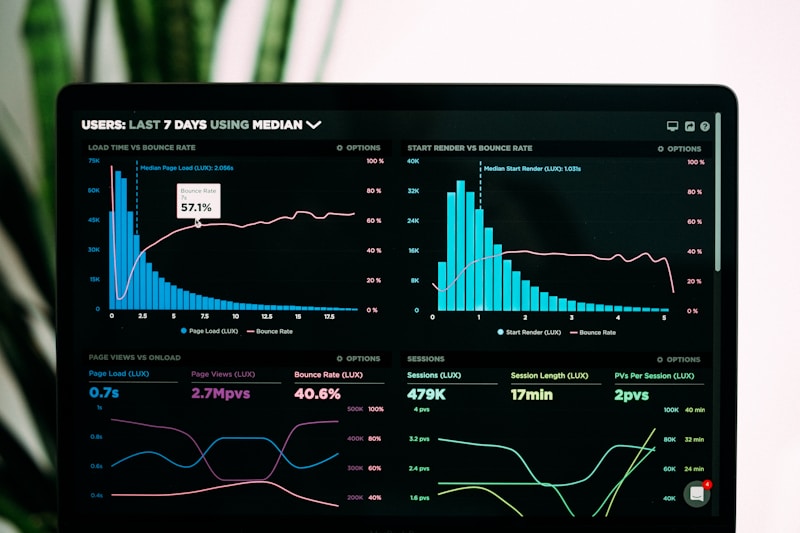
A fast React Native app is mostly a disciplined React app. Photo by UX Store on Unsplash.
Your list scrolls at 42 fps. Your app takes 3.8 seconds to cold start on a mid-tier Android. A tap on the primary CTA has a 280ms delay before the screen transitions. These three symptoms share a single cause: the JavaScript thread, the UI thread, or the render commit is blocked — and until you know which one, every "React Native performance optimization" tip you copy from a blog is a guess.
The good news is that 2026 is the easiest year in React Native history to build a fast app. The New Architecture is the default since 0.76, the old bridge was retired in 0.82, and Hermes V1 shipped as the default JavaScript engine in 0.84. A clean project on the latest stable release starts faster, renders faster, and uses less memory than a maximally-optimized 2022 codebase. Most of the work now is not undoing the good defaults.
This playbook is the order I'd optimize a React Native app in 2026. It's opinionated, prioritized by impact, and every section tells you how to measure the problem before you change code.
What "fast" actually means in React Native
Before any optimization, lock in a numeric target for each metric. "Feels snappy" is not a spec.
- Cold start (TTI): under 2.0s on a mid-tier Android (Pixel 6a class), under 1.2s on iPhone 13.
- Sustained scroll FPS: 58+ fps on the 99th-percentile device in your analytics.
- Interaction latency: under 100ms from tap to first visual feedback.
- JS memory working set: under 180MB for a normal-complexity app.
- Install size: under 30MB for the initial APK/IPA.
If you don't know your numbers yet, that's step zero. Sentry's mobile performance monitoring, Firebase Performance Monitoring, and the built-in Hermes sampling profiler will give you all five without much effort.
The 40-second answer for featured snippets
React Native performance optimization in 2026 means five things, in order: enable the New Architecture and Hermes V1 defaults, replace FlatList with FlashList for any list beyond a screen, eliminate unnecessary re-renders with memoization, move animations off the JS thread with Reanimated 4 worklets, and shrink your bundle with Metro tree-shaking and Hermes bytecode. Everything else is a tuning parameter on top of those five.
Step 1: Profile first — stop guessing
The fastest optimization is the one you don't write. A surprising number of "slow" React Native apps are slow because of a single offending component, and you can't find it by reading code. Start a profiling session before you touch a line.
The 2026 profiling stack I reach for:
- Hermes Sampling Profiler — bundled with Hermes. Record a trace, open it in Chrome DevTools, read the flame graph. Identifies JS-thread hogs in seconds.
- React DevTools Profiler — shows which components re-render and why. The "Highlight updates when components render" setting is still the fastest way to spot a re-render storm.
- Flashlight — open-source tool that runs performance benchmarks on real Android devices via ADB. Gives you a numeric performance score you can track across commits.
- Perfetto (Android) and Instruments (iOS) for platform-level traces. Essential for UI-thread and rendering issues the React side can't see.
- Expo's built-in performance inspector if you're on Expo SDK 52+.
Rule: don't optimize anything that doesn't appear in a profiler trace. "I think this is slow" has burned more engineer-weeks than any other sentence in mobile development.
Step 2: Be on the New Architecture (Fabric + TurboModules + JSI)
If you started your project in 2024 or later, you are almost certainly already on the New Architecture. If you're maintaining an older app that hasn't migrated, this is the single highest-impact change you can make in 2026.
The New Architecture replaces three legacy systems with modern equivalents:
| Legacy system | 2026 replacement | What you gain |
|---|---|---|
| Bridge (async, serialized JSON) | JSI (direct C++ binding) | Synchronous native calls. 40× faster bridge-equivalent latency. |
| Paper renderer (async diff) | Fabric (concurrent, C++) | 55-60 fps scrolling vs 30-45 fps on Paper. Synchronous layout. |
| Native modules (discovery at runtime) | TurboModules (lazy-loaded, typed) | Faster startup (~200-400ms saved), strict TypeScript types. |
| Dynamic view registry | Codegen | Typed spec files; native code generated from TS interfaces. |
Real-world data from migrations published through 2025-2026 shows cold start times cut by ~40%, rendering speeds up ~35%, memory use down ~25%, and JS-to-native call latency down ~40×. The migration is non-trivial for apps with many legacy native modules, but every new project should start here.
The practical steps: upgrade to the latest React Native (0.84 or higher), delete any JSC engine references, run npx @react-native-community/cli@latest doctor, and audit third-party libraries for New Architecture support. Expo SDK 52+ turns it on by default with one flag.
If you build with RapidNative's AI app builder, generated projects ship with the New Architecture enabled and New-Architecture-compatible libraries by default — the "does this library still work?" migration headache doesn't apply.
Step 3: Hermes V1 is the default — keep it that way
Hermes is the JavaScript engine, and as of React Native 0.84, Hermes V1 replaced both JSC and legacy Hermes as the default. Hermes V1 introduced a new compiler and virtual machine with meaningful wins: faster bytecode execution, lower memory footprint, better GC pause distribution.
What you actually need to know in 2026:
- Don't ship JSC. It's gone from the default and the iOS size savings of switching are only ~5-8MB anyway.
- Don't ship legacy Hermes if you're on 0.84+. V1 is strictly better for new code.
- Build bytecode in CI, not on-device. Hermes compiles JS to bytecode at build time — that's the whole point. If you see startup-time regressions, verify bytecode is actually being shipped (check for
.hbcfiles in your bundle). - Keep main bundle under 4MB of JS source. Beyond that, parse time creeps back in even with Hermes.
A common mistake: teams upgrade React Native but forget to toggle Hermes in ios/Podfile or android/gradle.properties after a native config regeneration. Double-check after every major upgrade.
Step 4: FlashList for every list that matters
The single biggest performance win in most 2026 React Native apps is replacing FlatList with FlashList from Shopify. FlashList recycles view instances instead of unmounting and remounting them, which maps directly to how UICollectionView (iOS) and RecyclerView (Android) work natively.
Typical gains from migration:
- 5× faster on data-heavy lists compared to FlatList.
- Lower JS-thread time during scroll (component reuse instead of re-mount).
- Stable 60fps scrolling on Pixel 6a-class devices with rows that include images and text.
The catch: FlashList requires an estimatedItemSize prop to do its recycling correctly. If you get that wrong, you get blank rows and jitter. Measure a representative row in your designs (or at runtime with onLayout) before shipping.
When you can't use FlashList — e.g. the list is genuinely dynamic and tall — fall back to tuned FlatList: initialNumToRender=10, maxToRenderPerBatch=5, windowSize=21, removeClippedSubviews on Android, and getItemLayout if your rows have a fixed height. getItemLayout is the single highest-impact FlatList optimization because it tells the list it doesn't need to measure each row to know its position.

Step 5: Kill unnecessary re-renders
This is the most underestimated category in mobile performance. A component that renders 5× per interaction when it should render once is 5× the JS-thread work — and on the JS thread is where your 60fps budget lives.
The four patterns that cause most re-render storms:
- Inline objects and arrays in props.
<Child style={{ padding: 8 }} />creates a new object every render. IfChildis wrapped inReact.memo, the memo break means it always re-renders. Lift the object out, or wrap it inuseMemo. - Inline handlers in parent components. Same problem.
onPress={() => doThing(id)}breaks memoization. UseuseCallbackwith dependencies, oronPress={handlePress}pointing to a stable reference. - Context providers that hold too much state. Every context consumer re-renders on every context value change. Split contexts by update frequency: a fast-changing cursor-position context should never be combined with a slow-changing auth-user context.
- Redux/Zustand selectors that return new references.
useSelector(state => state.items.filter(i => i.active))returns a new array every time even when nothing changed. UsecreateSelector(reselect) or a shallow-equality selector.
The detection workflow: open React DevTools Profiler, record a single interaction, sort by "Render count," look at the top five components. If anything there renders more than once, investigate. why-did-you-render is still the fastest library for auto-flagging these.
Step 6: Move animations off the JS thread
The JS thread is a single thread. Every requestAnimationFrame-driven animation competes with your render work, your event handlers, and your network responses for the same 16ms budget per frame.
Rule for 2026: animations that affect layout or visual state must not live on the JS thread.
The tools:
- React Native Reanimated 4 — worklets run on the UI thread. A pan, a fade, a scroll-linked header all execute at 60fps even while your JS thread is blocked by a render. This is the default for any non-trivial animation.
- React Native Gesture Handler — moves gesture detection to the UI thread. Pairs with Reanimated. Drop
PanResponderfor anything new. AnimatedwithuseNativeDriver: true— the old driver. Still fine for simpleopacityandtransformanimations. Don't use the JS driver for anything a user can see.- Skia (via
@shopify/react-native-skia) — when you need a custom rendering pipeline, confetti, canvas-style graphics. Skia runs on the UI thread.
A common anti-pattern: driving a list row's pressed state through setState. Even if the state change is local, you pay a React render tick. Do it with Reanimated shared values and you pay nothing on the JS thread.
Step 7: Cold start — the first 2 seconds are everything
Users judge a mobile app on the first screen transition. Every 100ms of cold-start delay past 2.0s correlates with a measurable drop in D1 retention.
Targets to audit:
- Main bundle size. Under 4MB of JS. Use
source-map-exploreron your output bundle; anything that looks surprisingly large (date-fns full build, large icon libraries, moment.js) is a fix. Swapmomentfordate-fnsordayjs. Import icons one at a time, not as a whole library. - App-init imports. Audit your root component's import tree. Every top-level import runs at cold start. Lazy-load analytics SDKs, A/B test clients, and error reporters after the first screen renders via
InteractionManager.runAfterInteractionsorReact.lazy. - Font loading. Use
expo-fontwithuseFontsand don't block first render on remote fonts. - Splash screen strategy. Keep the native splash up until your JS has hydrated the first screen.
expo-splash-screenorreact-native-bootsplashboth do this well. - Hermes bytecode. Already covered in Step 3; verify it's actually enabled.
- ProGuard / R8 on Android. Shrinks the release APK and speeds up class loading.
Measure cold start with performance.now() captured in your index and logged when the first screen's onLayout fires. Write it to an analytics event. Track it per release.
Step 8: Memory — the silent killer of long sessions
Memory leaks don't crash the app for your dev team (who relaunch it 50 times a day). They crash it for the user who left it open while watching a movie.
The three most common leaks I've seen in React Native apps:
- Uncleaned event listeners.
BackHandler.addEventListenerwithout a matchingremove().EventEmittersubscriptions that outlive the component. Set everyuseEffectreturn up as a cleanup. - Images that never unload. Large images held in state. Cache aggressively with react-native-fast-image — it caches at the native layer and frees memory on screen blur.
- WebSockets and timers without cleanup. Same pattern.
setIntervalin auseEffectwithout aclearIntervalin cleanup is a slow leak.
Use Xcode Instruments' Allocations tool (iOS) or Android Studio's Memory Profiler to find leaks. Run your app, do a session, force a GC, then diff allocations. Anything that didn't shrink is a leak.
Step 9: Network — parallelize, cache, and preload
Perceived performance is mostly network performance. The 2026 defaults:
- TanStack Query or RTK Query for data fetching. Both give you caching, deduplication, and stale-while-revalidate for free. Don't hand-roll fetch logic anymore.
- HTTP/2 or HTTP/3 on your backend. Modern React Native uses
URLSession(iOS) and OkHttp (Android), both support HTTP/2 out of the box. Verify your API server does too. - Image CDN with adaptive sizing. Cloudflare Images, Cloudinary, or imgix. Serve 1× images to old Androids, 3× to Pro iPhones.
- Parallelize.
Promise.allon independent requests. A common loss: fetching user, then teams, then projects serially when all three can run in parallel. - Optimistic updates. The UI should feel faster than the network. Update local state immediately, roll back on failure.
When to not optimize
A blog about performance has to include this section or it's lying by omission.
Do not optimize if:
- You haven't measured. You'll waste a week and maybe make things slower.
- The slow path runs once per session. A 400ms settings screen is fine.
- The optimization makes the code significantly harder to read. A re-render is cheaper than a team-member-week of maintenance.
- You're pre-launch with under 100 DAU. Ship the product. Optimize after you have data.
The biggest performance mistake I see small teams make in 2026 is over-optimizing an app nobody is using yet. Build it, ship it, then profile the real bottleneck — which is almost never what you guessed.
How RapidNative applies this playbook automatically
One reason we built RapidNative is that most of this playbook should be a default, not a checklist. When you describe an app in natural language and we generate the React Native + Expo code, the generated project already:
- Ships on the latest stable React Native with the New Architecture enabled.
- Uses Hermes V1 as the JavaScript engine.
- Uses FlashList for any generated screen with a scrollable list.
- Wraps expensive components in
React.memoand isolates heavy state. - Uses Reanimated for animations, not
Animatedwith the JS driver. - Lazy-loads heavier dependencies after first paint.
- Exports clean, production-ready code you can profile and extend — no lock-in.
You can start from a sketch, a PRD, or a screenshot, iterate with point-and-edit, then export the full Expo project. It's the fastest way to get from idea to a running, performant app — and a useful baseline even if you plan to rewrite from there.

People also ask
What is the biggest cause of React Native performance issues in 2026?
Unnecessary re-renders caused by unstable props (inline objects, inline callbacks) and unfocused context providers. Even on the New Architecture with Hermes V1, a component tree that re-renders 3-5× per interaction will drop frames. Profile with React DevTools first, then memoize with purpose.
Is React Native fast enough for production apps in 2026?
Yes — with the New Architecture, Hermes V1, and FlashList, React Native 0.84 apps match native in most user-visible metrics: scroll FPS, tap latency, cold start. Native wins only for GPU-intensive workloads like 3D games or video editing, where you'd use Skia or a native module anyway.
Should I migrate an old React Native app to the New Architecture?
If the app has more than a few screens, yes — the ~35% rendering gain and ~40% cold-start gain alone justify the migration. Start by upgrading to the latest stable release, auditing third-party libraries for New Architecture support, and running npx react-native doctor to verify config.
What's the fastest single performance win in React Native?
Replace FlatList with FlashList on any list beyond a single screen of content. Five-times performance gains on data-heavy lists with one library swap.
The short version
- Profile first. Always.
- Be on the New Architecture and Hermes V1.
- Use FlashList. Use
getItemLayouton any FlatList you keep. - Memoize deliberately. Kill re-render storms at the source.
- Move animations off the JS thread with Reanimated 4.
- Shrink your cold start: audit imports, bundle size, and splash strategy.
- Clean up listeners, timers, and image caches.
- Cache and parallelize network. Use TanStack Query.
- Don't optimize what isn't measured as slow.
Fast React Native apps in 2026 are mostly boring React Native apps built on good defaults. The hard part isn't finding a 10× trick — it's being disciplined enough to apply the known-good defaults everywhere, every time. Whether you build by hand or generate your starting point with AI, the playbook is the same: measure, fix, measure again.
Ready to build your app?
Turn your idea into a production-ready React Native app in minutes.
Free tools to get you started
Free AI PRD Generator
Generate a professional product requirements document in seconds. Describe your product idea and get a complete, structured PRD instantly.
Try it freeFree AI App Name Generator
Generate unique, brandable app name ideas with AI. Get creative name suggestions with taglines, brand colors, and monogram previews.
Try it freeFree AI App Icon Generator
Generate beautiful, professional app icons with AI. Describe your app and get multiple icon variations in different styles, ready for App Store and Google Play.
Try it freeFrequently asked questions
What is the biggest cause of React Native performance issues in 2026?
Unnecessary re-renders caused by unstable props (inline objects, inline callbacks) and unfocused context providers. Profile with React DevTools first, then memoize with purpose.
Is React Native fast enough for production apps in 2026?
Yes — with the New Architecture, Hermes V1, and FlashList, React Native 0.84 apps match native in most user-visible metrics: scroll FPS, tap latency, cold start.
Should I migrate an old React Native app to the New Architecture?
If the app has more than a few screens, yes — the ~35% rendering gain and ~40% cold-start gain alone justify the migration.
What's the fastest single performance win in React Native?
Replace FlatList with FlashList on any list beyond a single screen of content. Five-times performance gains on data-heavy lists with one library swap.