AI App Builder vs Traditional Development in 30 Days
By Suraj Ahmed
19th Sep 2026
Last updated: 19th Sep 2026

Give two teams the same brief — a fitness tracker for iOS and Android, sign-up, workout logging, progress charts, push notifications — and start the clock. One team goes the traditional route: hire a freelancer or agency, write specs, run sprints. The other opens an AI mobile app builder and starts typing. Thirty days later, where is each? This is not a hypothetical. Founders make this exact trade-off every week, and the honest answer is more nuanced than either side's marketing suggests. Below is a day-by-day timeline of the AI app builder vs traditional development race, with real hours, real costs, and the failure modes nobody advertises.
The two paths, in one paragraph
Traditional mobile app development takes 4-9 months and $40,000-$150,000 for a simple app when you use a freelance developer or agency, according to industry cost surveys. An AI app builder like RapidNative generates working React Native and Expo screens from natural-language prompts, sketches, PRDs, or screenshots — most founders reach a testable app on real devices within a single afternoon, and a polished, publishable app within 30 days.
That is the summary. The 30-day diary below is where the real differences show up.
Day 1: The kick-off gap
Traditional team. Day 1 is an intake call. The founder describes the app. The agency sends a Notion doc: "Discovery Questionnaire — 41 questions." Wireframes, brand assets, target platforms, backend preferences, third-party integrations, monetization model. Most of Day 1 is spent answering questions the founder hasn't yet decided on. A rough scope estimate arrives 3-5 business days later. The clock is running; nothing has been built.
AI app builder team. Day 1, hour one: the founder types "a fitness tracker with sign-up, workout logging, and a weekly progress chart" into RapidNative's prompt box. Within about 90 seconds a working set of screens streams into a live preview. The app is not finished — nothing is — but it is real. The founder can open it on an iPhone via a QR code, scroll through it, and see what feels wrong. That is the crucial part: feedback starts on Day 1, not Day 30.
The 3-step "idea to app" workflow — describe or sketch, watch it come to life, share or publish — collapses the intake phase into a text box.
Days 2-7: Requirements vs iteration
The first week is where the paths diverge sharply.
The traditional team is still in requirements gathering. Wireframes get sketched, revised, sketched again. A designer produces Figma frames. The founder reviews them, requests changes, waits for turnaround. By end of week one, the deliverable is a clickable Figma prototype — no code, no functionality, no way to actually try the app.
The AI app builder team spends week one iterating. Every prompt refinement produces a working screen a few seconds later. "Make the progress chart weekly, not daily." Done. "Add a rest-day tag on the workout log." Done. "Move the streak counter to the top of the home screen." Done. Team members drop into the same project and collaborate in real time — a designer tweaks copy on the empty state, a co-founder tries the checkout flow on their phone, a product manager shares the QR code with a customer for a 10-minute feedback call.
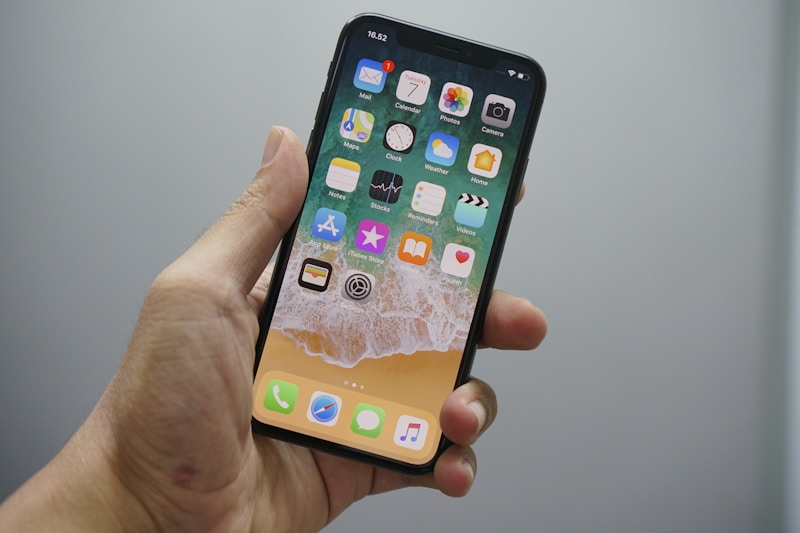
 Iteration speed compounds. Ten small changes per day beats one large change per week. Photo by Picjumbo on Pexels
The "compound iteration" advantage nobody quantifies
Here is the insight competitors miss. In traditional development, each iteration cycle costs a full round-trip: request → developer schedules it → developer implements it → QA → review → deploy to TestFlight. Even in a well-run agency, that is 2-5 days per revision. Multiply by the 40-80 tweaks a typical MVP needs before launch, and you get months of calendar time consumed by iteration overhead alone.
With an AI app builder, revision latency drops from days to seconds. RapidNative's point-and-edit feature lets you click any element in the preview and describe what should change — the model rewrites the underlying React Native code, and the preview updates in place. Ten small iterations per day, easily. That is why 30 days of AI-builder time typically produces more surface area of validated app than 30 days of traditional development produces of unvalidated app.
Days 8-14: Backend and the first real cost surprise
Traditional teams typically hit their first invoice surprise here. Everything before was "discovery" — often billed as fixed-fee or eaten in the retainer. Now the backend needs building: database schema, authentication, API endpoints for workout data, push notification setup. A freelance backend engineer at $70-$180 per hour, plus a Firebase or Supabase setup fee, plus DevOps time. Two weeks of backend work at 30 hours per week at a $120 blended rate is $7,200 — for infrastructure the user never sees.
The AI app builder team gets the backend for free — meaning already included, already wired. RapidNative's fullstack template ships with Supabase authentication, a Postgres database with generated types, row-level security policies, and screens that read and write real data by end of Day 1. Adding a table is one prompt: "Add a workouts table with user_id, date, duration_minutes, calories, and a notes field, then use it in the workout log screen." A migration file is written, applied, validated, and the screen is regenerated to use it — all inside the same session.
This does not mean AI app builders are magic. They are magic because a real database sits underneath them, not despite it. The PRD-to-app workflow even reads a product requirements document and infers the schema from it.
Days 15-21: Polish, edge cases, and where AI still gets it wrong
Weeks three is where the AI app builder path stops looking effortless.
The generation is fast. The first 80% of screens are excellent. The last 20% — the empty states, the error handling, the "what if the user has zero workouts and no photo," the "what if their internet drops mid-save" — takes real work. RapidNative handles it well because you can point at the specific state and describe it, but you have to actually think through those cases. No tool skips that.
Meanwhile the traditional team is finally shipping something. TestFlight builds arrive. The founder tries the app, finds bugs, opens Jira tickets. Because it took three weeks to reach a testable state, the feedback cycle now begins under time pressure — with a burn-rate meter ticking.
Both teams are debugging in week three. The difference is that the AI app builder team has been debugging in production-shaped code since Day 1. RapidNative exports full React Native and Expo source you can hand to any developer, and the codebase looks like a codebase — not a low-code prison.
Days 22-30: App Store submission, and the hidden final week
Traditional path. Week four is sometimes enough time to prepare an App Store submission, and often not. Screenshots need designing at six iPhone resolutions and two iPad resolutions. Copy needs writing. Privacy manifests, App Tracking Transparency prompts, and the App Privacy questionnaire need answering. Then Apple's review — 24 to 48 hours if you are lucky, and any rejection restarts the meter.
For most simple apps built traditionally, Day 30 arrives before the first App Store submission. The realistic total from kickoff to live-on-App-Store is 4-6 months, per industry data.
AI app builder path. RapidNative projects hit App Store submission on Day 15-25 for straightforward apps. The tool exports a signed, buildable Expo project that plugs into EAS Build for iOS and Android binaries. Store screenshots can be captured from the live preview. You still wait for Apple review, but you get there weeks earlier.
Some teams use a deploy service to hand off the entire submission phase — screenshots, review responses, and all — for a flat fee. Either way, Day 30 for the AI app builder team commonly means "live in one or both stores." Day 30 for the traditional team usually means "backend deployed, iOS build in QA, no submission yet."
Cost, side by side
| Line item | Traditional (freelance / agency) | AI app builder (RapidNative) |
|---|---|---|
| Discovery + wireframes | $2,000 – $8,000 | Included in prompt time |
| iOS + Android development | $15,000 – $80,000 | Included |
| Backend (Supabase / API) | $5,000 – $20,000 | Included |
| Design polish | $3,000 – $10,000 | Included |
| Project management | $2,000 – $8,000 | Founder-owned |
| App Store submission | $500 – $3,000 | Optional add-on |
| 30-day total | $27,500 – $129,000 | $20 – $200 (per month plan) |
| Time to first user test | 3-4 weeks | Day 1 |
| Time to store submission | 8-24 weeks | 2-4 weeks |
Numbers reflect a simple app with authentication, one primary data model, and standard iOS + Android delivery. Complex apps (video streaming, real-time multiplayer, custom hardware integrations) increase the traditional cost more than they increase the AI-builder cost, because scope-driven variance is the traditional model's biggest lever.
Independent reporting from cost-benchmark sites places mobile app development cost between $40,000 and $150,000 for a basic app, aligning with the traditional column above.
When traditional development still wins
Being honest here matters. AI app builders are not the right answer for every project.
- Deep hardware integrations. Bluetooth-heavy fitness peripherals, custom audio pipelines, ARKit-native experiences — anything that lives in the platform's C++ or Swift/Kotlin layer needs a developer who speaks that layer.
- Regulated backends with unusual compliance. HIPAA-adjacent, PCI Level 1, or GDPR contexts with custom data-residency rules often need architecture decisions that go past what an AI-generated stack ships with.
- Highly custom UI systems. If the entire product experience is a novel interaction model — a new drawing surface, a physics engine, a live-video shader — the AI-generated code will be a starting point, not the finish line.
- You already have a strong native team. Teams with two mid-level iOS engineers on payroll are not the target audience for prompt-based building.
Roughly 80% of the apps founders describe fit inside what an AI app builder produces cleanly. The other 20% benefit from a hybrid: prototype in an AI builder, hand the exported code to specialists for the hard parts. RapidNative's exportable React Native codebase is specifically designed for that handoff.
People also ask
How long does it take to build a mobile app with AI?
A basic mobile app built with an AI app builder like RapidNative reaches a testable state on real iOS and Android devices within an hour, a polished MVP within 1-2 weeks, and App Store submission within 2-4 weeks. Traditional freelance or agency development for the same app typically takes 4-9 months from kickoff to store submission.
Is AI-generated React Native code production-ready?
Yes, when the tool generates real React Native and Expo source rather than a proprietary runtime. RapidNative outputs an exportable Expo project with TypeScript, Supabase integration, and standard file structure — the same shape any React Native engineer would recognize. It runs on iOS, Android, and web from a single codebase.
What is the real cost difference between an AI app builder and hiring a developer?
For a comparable simple app in the first 30 days, an AI app builder costs $20-$200 in subscription fees. A freelance developer bills $10,000-$40,000 at typical rates ($70-$180 per hour), and a full-service agency bills $30,000-$130,000+. Costs compound in the traditional path: iteration cycles, QA, and project management add ongoing hours.
Can you export the code from an AI app builder?
RapidNative exports the full React Native and Expo source code, including screens, components, navigation, and Supabase migrations. You can hand the codebase to any developer, run it locally, and continue building without the AI tool. Not every AI app builder does this — many are proprietary runtimes with no exit path. Check for exportable, standard-framework code before committing.
The compound advantage of shipping earlier
The 30-day comparison misses a deeper effect if you focus only on Day 30. The AI app builder team has been getting real user feedback since Day 1. By Day 30 they have watched actual users use the app for 25+ days, discovered features nobody asked for, killed features everybody thought they wanted, and adjusted pricing three times. The traditional team has spec-driven decisions built on assumptions from Day 1 — and no data to correct them until Day 90+.
Shipping earlier is not just faster. It is epistemically cheaper. You buy real information instead of paying for guesses.
The honest verdict
For a founder, product manager, or small team who needs a real, native iOS and Android app in the next month — and who cares more about validated learning than architectural purity — AI app builders now win the 30-day race decisively. Costs are 100-500x lower. Time to first user feedback drops from weeks to minutes. And because the output is real React Native code, the exit path back to traditional development is always open.
For teams building at the edges of what mobile can do, traditional development is still the right call. But those teams already know who they are.
Start your own 30-day timeline. Build your first app free with 20 credits — no credit card, no setup, no Mac required. Or compare plans on the pricing page if you already know you want to go the distance.
For more comparisons, see our takes on AI vs React Native boilerplate and the real cost of building a mobile app in 2026.
Ready to build your app?
Turn your idea into a production-ready React Native app in minutes.
Free tools to get you started
Free AI PRD Generator
Generate a professional product requirements document in seconds. Describe your product idea and get a complete, structured PRD instantly.
Try it freeFree AI App Name Generator
Generate unique, brandable app name ideas with AI. Get creative name suggestions with taglines, brand colors, and monogram previews.
Try it freeFree AI App Icon Generator
Generate beautiful, professional app icons with AI. Describe your app and get multiple icon variations in different styles, ready for App Store and Google Play.
Try it freeFrequently asked questions
What is RapidNative?
RapidNative is an AI-powered mobile app builder. Describe the app you want in plain English and RapidNative generates real, production-ready React Native screens you can preview, edit, and publish to the App Store or Google Play.
Can I export the code?
Yes. RapidNative generates clean React Native and Expo code that you can export at any time. No lock-in, no proprietary format. Hand it to your developers or keep building inside RapidNative.
Is RapidNative free to use?
Yes. You can build apps on the free plan with no credit card required. Paid plans unlock unlimited AI generations, code export, and direct publishing to the App Store and Google Play.
Do I need to know how to code?
No. Most users build apps by describing what they want in plain English. Developers can drop into the code whenever they want more control, but coding is optional.
How long does it take to build an app?
Most users have a working first screen in under a minute. A full MVP usually takes a few hours instead of the weeks or months traditional development requires.