Android Studio Cloud Is Shutting Down: How to Build an Android App Without Android Studio
Android Studio Cloud closed to new workspaces in June 2026. Here's what it was, what a local Android Studio install asks of your computer, and how to build a real Android app in your browser instead.
By Russel
9th Nov 2026
Last updated: 9th Nov 2026
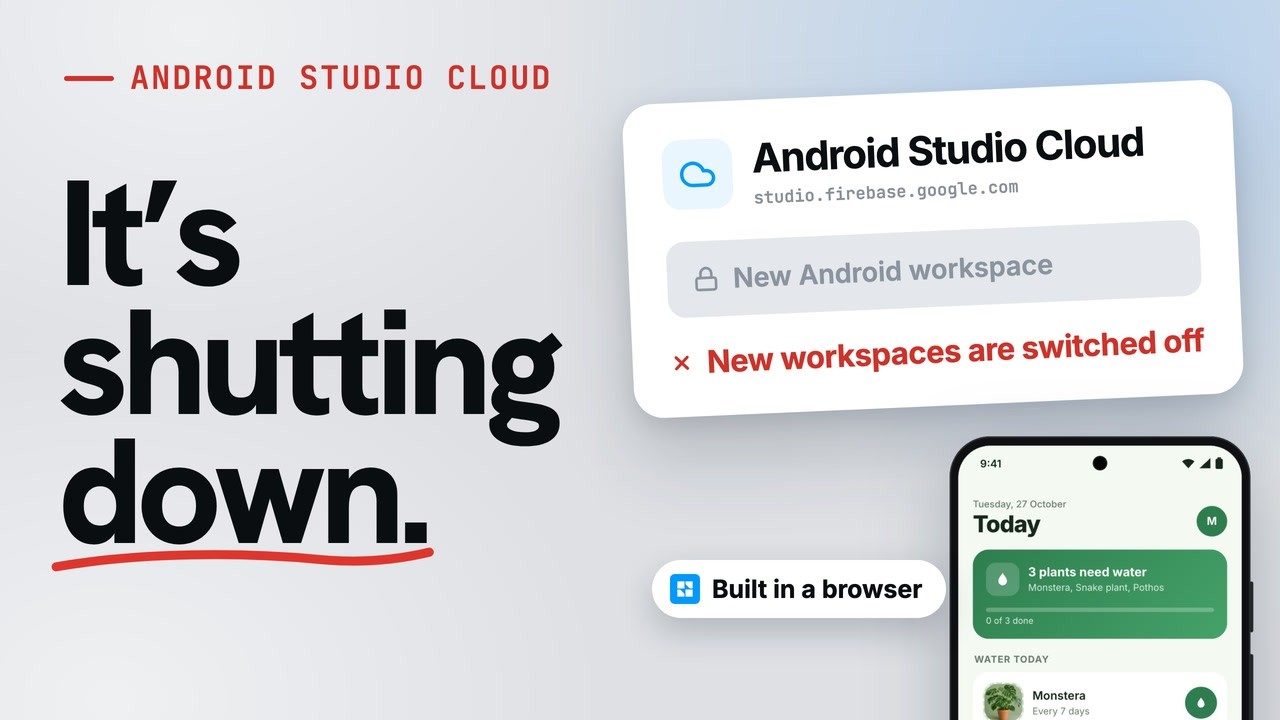
If you searched for Android Studio Cloud, here's the short answer: it's closing. Google's browser-based Android Studio ran inside Firebase Studio, which stopped accepting new workspaces and sign-ups on June 22, 2026, and shuts down for good on March 22, 2027. Google's advice is to install Android Studio on your own computer instead.
That works if you have a strong machine and want to learn Kotlin and Gradle. But if you're on a modest laptop or a Chromebook, or you just want your idea running on an Android phone, there's a shorter path. This guide covers what Android Studio Cloud was, what a local install really needs (Google's own numbers), and how to build an Android app without Android Studio, right in your browser.
Prefer to watch? The whole walkthrough is in this 6-minute video:
Is Android Studio Cloud Still Available?
No. Android Studio Cloud is closed to new users. It lived inside Firebase Studio, and Google switched off new Firebase Studio workspaces and sign-ups on June 22, 2026. If you already have a workspace, you can still open it until March 22, 2027. On that date Firebase Studio shuts down and anything left inside is permanently deleted.
Here's how it played out:
| Date | What happened |
|---|---|
| May 2025 | Android Studio Cloud launches as an experimental preview, around Google I/O |
| March 19, 2026 | Google announces that Firebase Studio is shutting down |
| June 22, 2026 | New workspaces and new sign-ups are switched off |
| March 22, 2027 | Firebase Studio shuts down and remaining data is deleted |
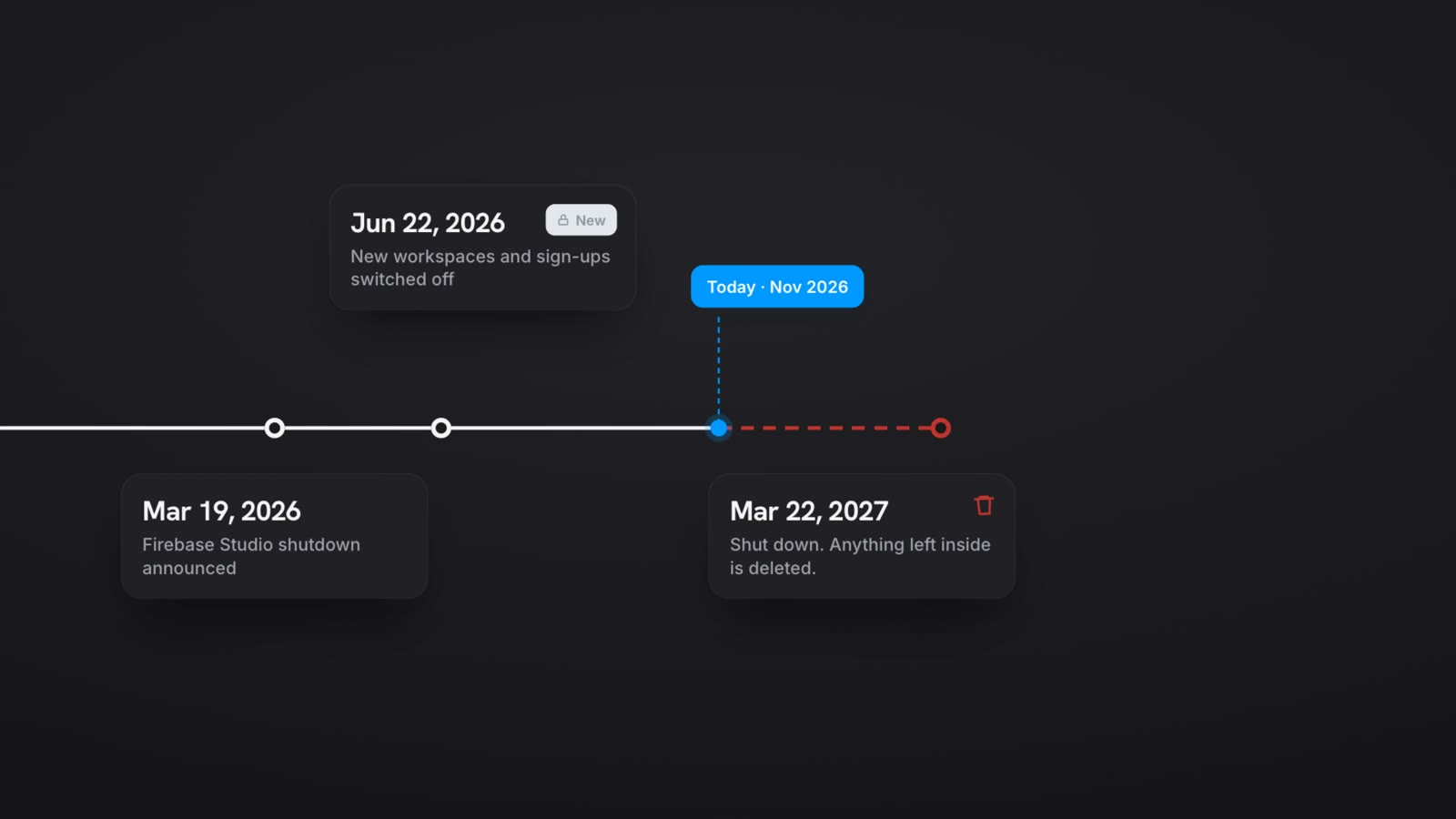
If you still have a project in there, move it out now: push it to GitHub or download it, following Google's Firebase Studio migration guide. Apps you've already shipped keep working, and Android Studio on your desktop isn't affected. Only the cloud workspace goes away.
What Android Studio Cloud Actually Was
Android Studio Cloud wasn't a new tool. According to Google's own page, it was the regular Android Studio, running on a Linux virtual machine in Google's cloud and streamed to your browser through Firebase Studio. Google pre-downloaded the Android SDK and the IDE into each workspace, so you skipped the big install and could open your project from any computer with an internet connection.
That solved a real problem. But once the workspace opened, you were still in the full Android Studio IDE, with Kotlin, Gradle, SDK versions and emulator images to deal with. In other words, Android Studio Cloud changed where Android Studio runs. It didn't change what you need to know to use it. Keep that distinction in mind, because it's the key to picking a replacement.
What Android Studio Needs on Your Computer
With the cloud version gone, Google points people to a local install. Android Studio is free, and it's a great tool for professional Android work. Here's what Google lists for a Windows PC on its install page (checked November 2026):
| Requirement | Android Studio only | With the Android Emulator | Recommended |
|---|---|---|---|
| RAM | 8 GB | 16 GB | 32 GB |
| Free disk space | 8 GB | 16 GB | 32 GB or more, on an SSD |
| Processor | 2017 or newer (Intel 8th Gen Core i5 or AMD Ryzen) | Same | Latest generation |
| Virtualization | Intel VT-x or AMD-V, switched on in the BIOS | Same | Same |
| Graphics card | None | 4 GB of video memory | 8 GB of video memory |
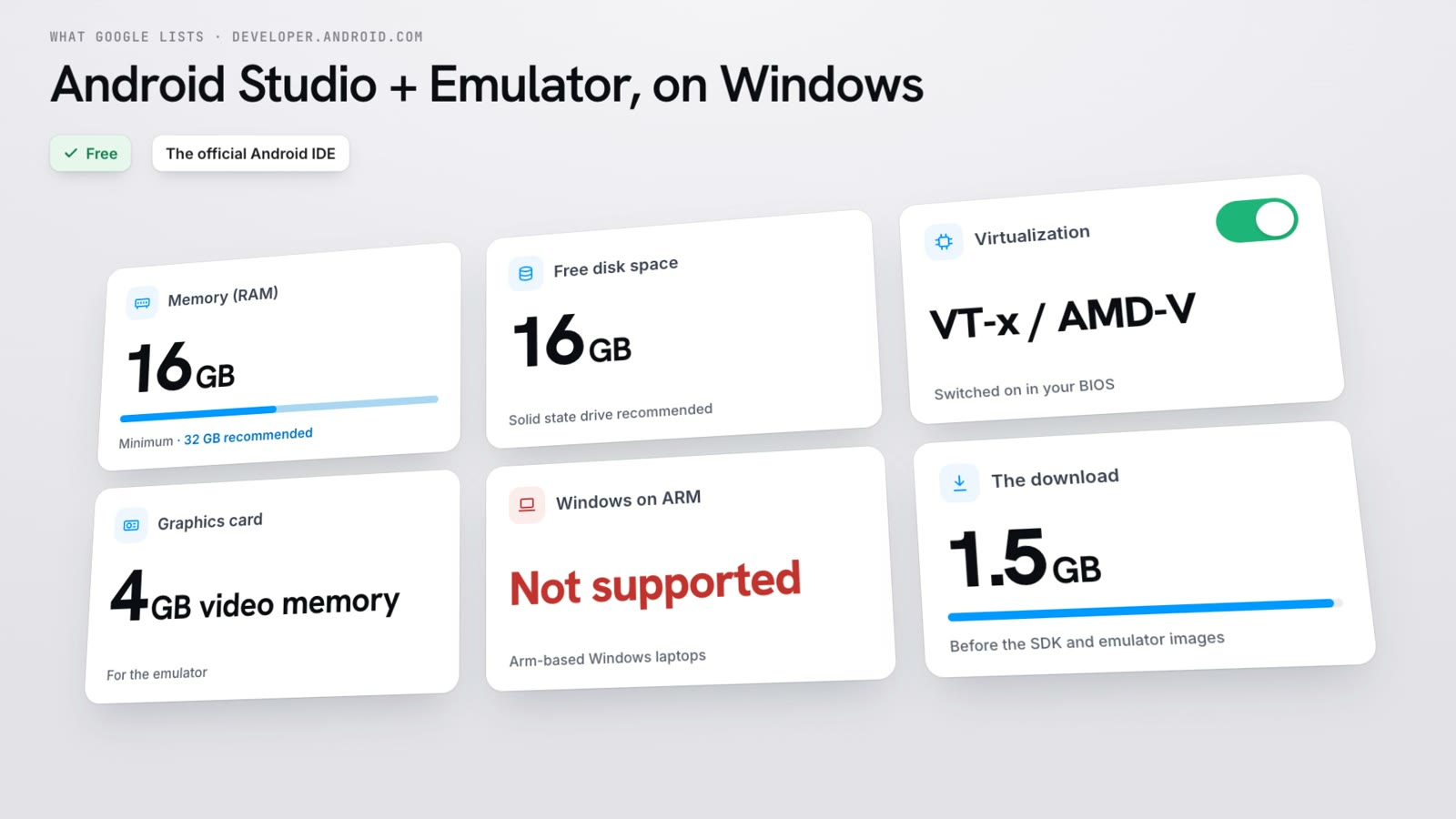
A few more details from the same page are worth knowing before you download anything:
- Windows laptops with ARM chips aren't supported, and neither are Linux machines with ARM chips.
- Intel Core N-series and U-series processors are "not recommended due to insufficient performance." Those are the chips in many budget and thin laptops.
- Macs with Intel chips are being phased out. Apple Silicon is the recommendation.
- The download alone is about 1.5 GB, before the SDK components and emulator images that the setup wizard adds.
- On a Chromebook, you install it through Linux for ChromeOS, and Android Studio can only deploy your app to a phone connected to the Chromebook.
Then comes the learning
The hardware is only half of it. A first native Android app also means learning Kotlin, Jetpack Compose, Gradle, SDK versions and emulator images. If you want a career as an Android engineer, that's exactly the right path, and it's worth the effort. If you just want your idea running on a phone, it's a lot to take on before you see a single screen.
Two Problems, and Which One Android Studio Cloud Fixed
So there are really two problems standing between most people and their first Android app:
- Where the tools run. A heavy IDE, an emulator, and a computer strong enough for both.
- What you need to know to use them. Kotlin, Gradle, the SDK, signing, and the rest of the toolchain.
Android Studio Cloud fixed the first one. It never touched the second.
If you search for "build an Android app without Android Studio", most results are developer guides: compile with Gradle from the terminal, run npx expo run:android, or build with Ionic or Capacitor. Those skip the IDE, but they still need a JDK and the Android SDK on your machine, and they assume you're comfortable on the command line. That's a fine route for developers, and our guide to building a React Native app for Android walks through that setup step by step.
For everyone else, the better answer is a tool that removes both problems at once.
How to Build an Android App Without Android Studio
RapidNative is an AI app builder that runs entirely in your browser. You describe the app in plain words, and it builds a real React Native app with Expo: screens, login and a database. There's no Android Studio, no SDK, no emulator and nothing to install. Here's the same flow as in the video.
Step 1: Describe your app
Go to rapidnative.com and type your idea into the box. In the video, the prompt is:
A plant care app for busy plant owners. Add your plants, and see which ones need water today. Clean, green and white.
Then click Build it. You can start free, with no credit card. If you'd rather start from something visual, you can also upload a screenshot, a sketch or a design, and RapidNative turns it into working screens.
Step 2: Let it build the screens, login and database
RapidNative builds your app one piece at a time: the main screens, a login flow, and a real database for your app's data. You can watch each screen appear on the canvas as it's built.
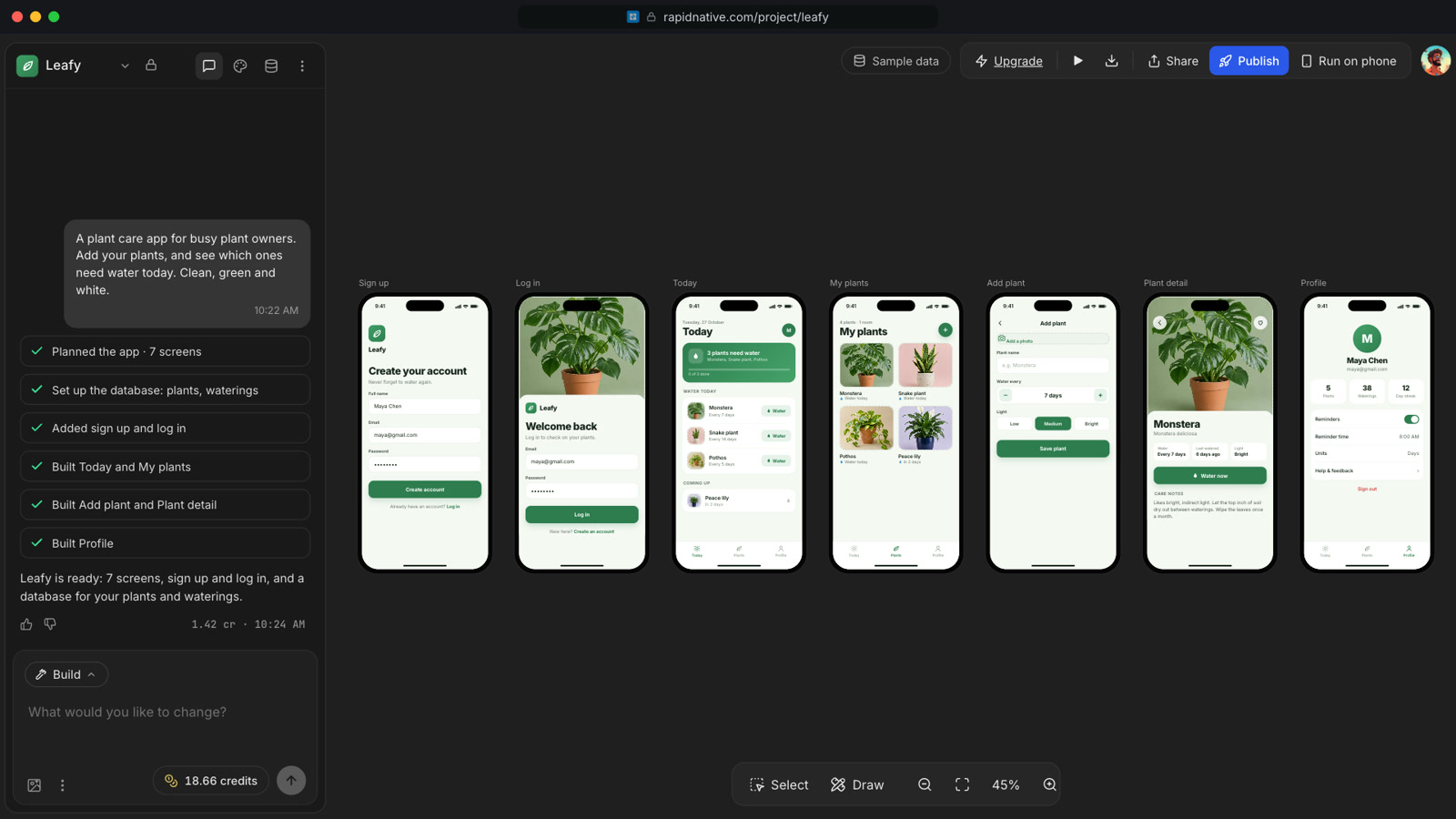
Step 3: Try it and change it in the browser
Click play to use the app right in the editor. In the video, adding a plant saves it to the app's own database, so you're testing real behavior, not a static mockup.
To change something, click Select, pick any part of the screen, and say what you want. Or type it in the chat, like "add a watering history screen", and the new screen appears. If you've never built software before, our guide on how to build an app without coding covers how to write prompts that get you what you want.
Step 4: Run it on your Android phone with Expo Go
This is the step Android Studio makes hardest, and here it takes about a minute:
- On your Android phone, install Expo Go from Google Play.
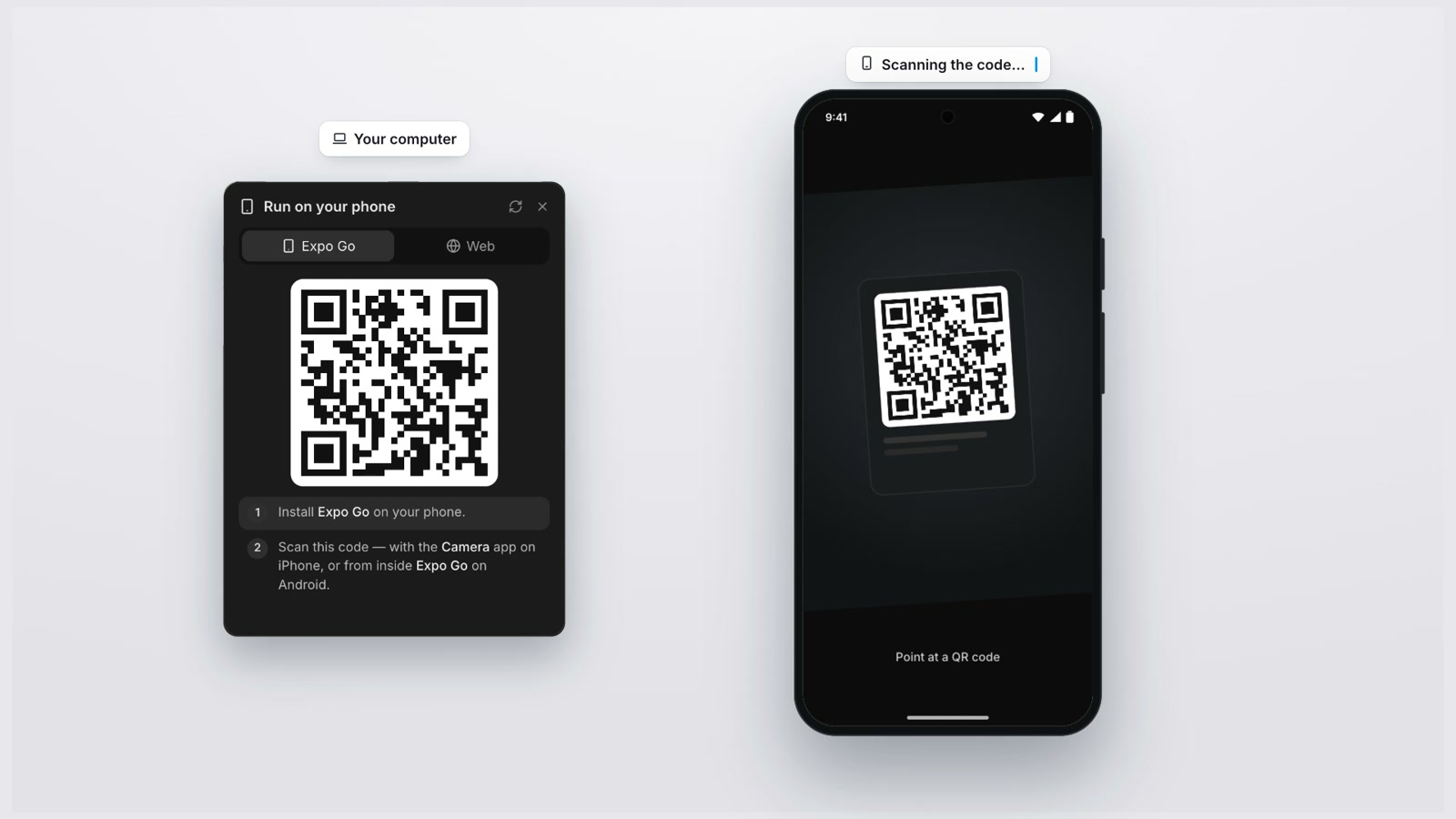
- In RapidNative, click Run on phone to show the QR code.
- Open Expo Go, tap Scan QR code, and point your camera at the screen.
Your app opens on a real Android phone. No cable, no emulator, no SDK. When you ask for a change in the editor, your phone updates in seconds. If you're curious what happens behind that scan, we explain it in how RapidNative's QR code preview works on real devices.
Is it a real native app? Yes. It isn't a website in a wrapper. It's a React Native app built with Expo, using native components, so scrolling, buttons and navigation feel right at home on Android. And because it's React Native, the same project runs on iPhone too, through Expo Go on iOS. One project, both platforms. Our guide to cross-platform mobile development goes deeper on why that matters for a new app.
Step 5: Get an APK you can install
When you want the app installed for real, rather than running inside Expo Go, you can get an APK. On paid plans, RapidNative builds the APK in the cloud and emails you a download link when it's ready. Open it on any Android phone to install it. If a build fails to start or never finishes, the credits for it are refunded automatically. APK builds are rolling out to paid plans now.
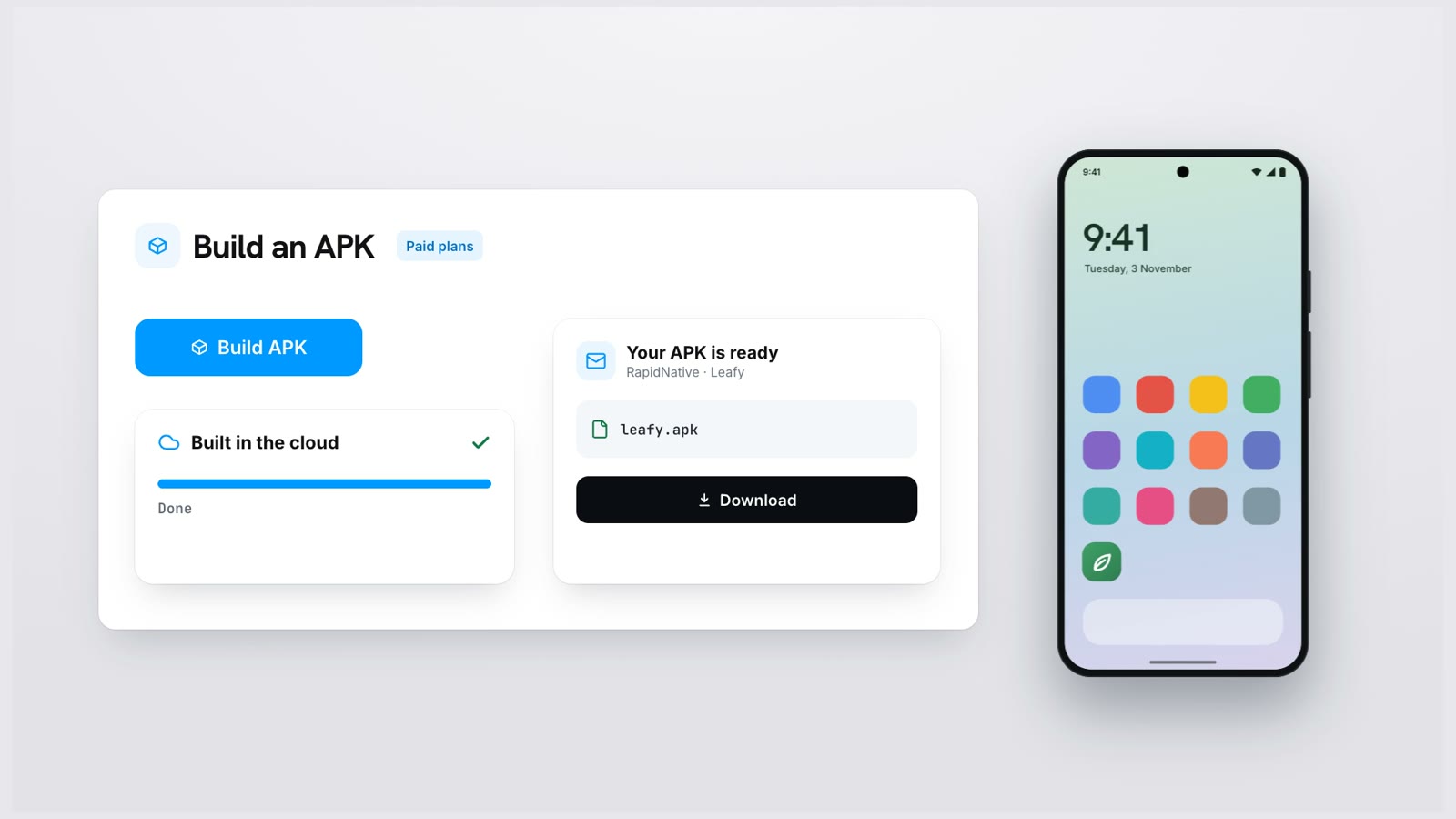
An APK is for installing and testing on your own devices. To get onto Google Play, you publish a release, which is the next step.
Step 6: Publish to Google Play
Publishing on Google Play has two requirements that catch first-time developers off guard:
- A developer account, which costs a one-time US$25 registration fee.
- A closed test first, if your account is new. Personal developer accounts created after November 13, 2023 must run a closed test with at least 12 testers, opted in for 14 days in a row, before they can publish to production. Our guide to Android beta testing explains how Google Play's testing tracks work.
From there you have two ways to ship:
- Hand it off. In the editor, click Publish and choose automatic deployment with LetsDeployIt, our deployment service from the same team. It handles the build, the store listing and the submission. It's a separate paid service, priced on LetsDeployIt.
- Ship it yourself. On any paid plan (Starter is $20/month), download the full source code. It's a standard Expo project, so you can build it with EAS Build and submit it with your own tools. Our post on React Native app source code shows what you get in the export.
There's no lock-in either way. If you ever need Android Studio later, for a native module or a platform-specific feature, your code comes with you.
Build Android Apps on a Chromebook, Tablet or Older Laptop
Because RapidNative runs in a browser tab, the device you build on barely matters. That opens up a few setups that Android Studio handles badly:
- Chromebooks. No Linux container to set up, and no cable to your phone. Build in Chrome, test with a QR scan.
- Tablets. Describe and edit your app from a tablet's browser, then test on your phone.
- Older or budget laptops. The N-series and U-series laptops that Google doesn't recommend for Android Studio run a browser tab just fine.
This is what Android Studio Cloud promised, without the full IDE waiting at the other end.
Android Studio vs Android Studio Cloud vs RapidNative
Here's how the three compare side by side, as of November 2026:
| Android Studio | Android Studio Cloud | RapidNative | |
|---|---|---|---|
| Where it runs | Your computer | Google's cloud, streamed to your browser | Your browser |
| Setup | ~1.5 GB download, SDK, BIOS virtualization | Closed to new workspaces since June 22, 2026 | Nothing to install |
| Computer you need | 16 GB RAM and a 4 GB GPU for the emulator | Any computer with a browser | Any device with a browser |
| Skills | Kotlin, Jetpack Compose, Gradle | Same as Android Studio | Plain words. The code is there when you want it |
| Testing on a phone | Emulator, or a phone connected for debugging | Not available to new users | One QR scan with Expo Go |
| Platforms | Android | Android | Android and iPhone, from one project |
| Status | Active | Shuts down March 22, 2027 | Active |
| Cost to start | Free | Was a free preview | Free, no credit card |
When Android Studio Is Still the Right Choice
To be fair, Android Studio is still the right tool in plenty of cases:
- You want a career in native Android development.
- You need deep platform features or custom native code that goes beyond what React Native and Expo offer.
- You're building for Wear OS watches, Android TV or cars.
Our comparison of React Native vs native development and our roundup of native app development tools can help you decide. But if you want your idea running on a real Android phone today, without installing anything, start in the browser.
What About Firebase Studio and Google AI Studio?
Since Android Studio Cloud lived inside Firebase Studio, you may also see Google's broader advice for Firebase Studio users. Its sunset guide points to two places: Google AI Studio, which runs in the browser and builds from prompts, and Antigravity, a desktop app for code-first work.
Since Google I/O in May 2026, Google AI Studio can build native Android apps in Kotlin, with an Android emulator in the browser. You install the app on your phone through ADB, Android's developer bridge, and publishing goes to Google Play's internal test track. That's a real step forward. The difference is reach: it builds Android apps only, so iPhone owners can't use what you make. RapidNative builds one React Native app for Android and iPhone, tested on your real phone with a QR scan and shipped to both stores. We compare the two in detail on our Google AI Studio vs RapidNative page.
Start Building Your Android App
Android Studio Cloud was a good idea: Android development without the heavy machine. Its shutdown leaves two options. You can install Android Studio and learn the full toolchain, which is the right call for a career in native Android. Or you can skip both problems and build in your browser.
If you'd rather do the second, open rapidnative.com, describe your app, and scan the QR code with your phone. You can start free, with no credit card, and have your first Android app running on your phone in minutes. No install. No emulator. Go build your Android app.
Ready to build your app?
Turn your idea into a production-ready React Native app in minutes.
Free tools to get you started
Free AI PRD Generator
Generate a professional product requirements document in seconds. Describe your product idea and get a complete, structured PRD instantly.
Try it freeFree AI App Name Generator
Generate unique, brandable app name ideas with AI. Get creative name suggestions with taglines, brand colors, and monogram previews.
Try it freeFree AI App Icon Generator
Generate beautiful, professional app icons with AI. Describe your app and get multiple icon variations in different styles, ready for App Store and Google Play.
Try it freeFrequently asked questions
Is Android Studio Cloud still available?
No. Android Studio Cloud ran inside Firebase Studio, which switched off new workspaces and new sign-ups on June 22, 2026. Existing workspaces still open until March 22, 2027, when Firebase Studio shuts down and anything left inside is permanently deleted.
What should I use instead of Android Studio Cloud?
Google recommends installing Android Studio on your own computer. If your computer can't run it comfortably, or you don't want to learn Kotlin and Gradle first, you can build in your browser with RapidNative. It creates a real React Native app that you run on your Android phone with one QR scan.
Can I build an Android app without Android Studio?
Yes. Developers can build from the command line with Gradle or the Expo CLI, but that still needs a JDK and the Android SDK. With RapidNative you need neither: you describe the app in a browser tab, test it on your phone with Expo Go, and get an APK or a Google Play release without installing anything.
How much RAM does Android Studio need?
Google lists 8 GB of RAM for Android Studio alone, 16 GB if you also run the Android Emulator, and 32 GB as the recommendation, on Windows, Mac and Linux. With the emulator you also need 16 GB of free disk space and, on Windows and Linux, a graphics card with 4 GB of video memory.
Can I build an Android app on a Chromebook?
Yes. Android Studio installs on ChromeOS through Linux for ChromeOS, but it can only deploy your app to a phone connected to the Chromebook. RapidNative runs in Chrome with nothing to install, and you test the app on your phone by scanning a QR code.
Is an app built with RapidNative a real native Android app?
Yes. RapidNative builds a React Native app with Expo that uses native components, not a website in a wrapper. The same project also runs on iPhone, so one app can go to both Google Play and the App Store.
Can I get an APK without Android Studio?
Yes. On RapidNative's paid plans you can build an installable APK in the cloud, and RapidNative emails you the download link when it's ready. You can also export the full source code and build it yourself with Expo's EAS Build.