What Comes Next for AI App Builders: The 2026–2027 Roadmap
of an AI-generated mobile app has been: **beautiful prototype, non-functional product**. The moment you tried to charge someone, or push a notification, or read a crash report from the wild, you fell off a cliff into "hire a real developer.
By Suraj Ahmed
28th Sep 2026
Last updated: 28th Sep 2026
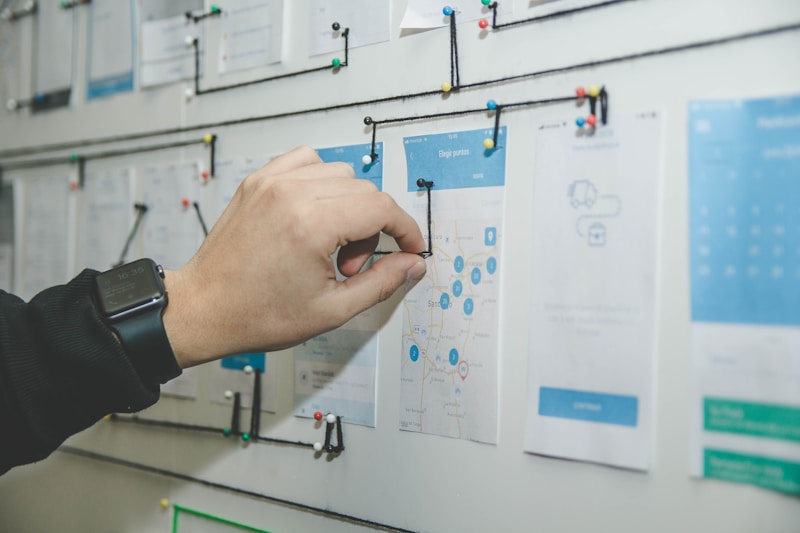
For most of 2025 and early 2026, the AI app builder category was still answering a fairly narrow question: can an LLM generate a working mobile screen from a sentence? By the second half of 2026, that question has been answered — and comprehensively. The next question, the one that will define the AI app builder future through 2027, is much harder: can a prompt-driven builder produce an app people will actually pay money to use?
That is the question the RapidNative roadmap is now organized around. This post walks through where we are, what we ship next, and where the wider category is heading over the next 18 months — grounded in what actually landed in production last month, not what a keynote slide claimed a year ago.
The short answer: what comes next for AI app builders
AI app builders in 2026–2027 are moving from screen generators to full product-shipping platforms. The near-term roadmap is dominated by monetization SDKs, native device APIs, and one-tap App Store submission. By H1 2027 the frontier shifts to agentic multi-agent teams, deeper backend automation, and on-device AI inside the generated apps themselves. Prompt-to-UI is table stakes now; prompt-to-revenue is the race.
The Threshold RapidNative Just Crossed
To understand where AI app builders are going, it helps to look at the specific line the platform crossed in September 2026. Version 2.11 added native SDK support for in-app purchases via RevenueCat, Sentry crash reporting, Expo push notifications, AdMob banners with UMP consent, and Twilio SMS verification. That is a large release on its own — but the meaningful part is what it changes about the category.
Until this point, an "AI-generated app" was, by convention, a beautiful prototype that stopped working the moment you tried to charge someone for it. The paywall would be a mock, the crash reports would go nowhere, and push notifications would require a developer to leave the tool and set up an Expo project by hand. Version 2.11 removed the last of those seams. A prompt like "add a subscription paywall with a 7-day trial and Restore Purchases" now wires the real RevenueCat SDK, displays localized store prices, and unlocks premium content — the same code path a hand-coded Expo app would take.
This is the actual definition of "production-ready" that the industry has been dancing around. Not "the code compiles" — anyone can ship that. Production-ready means the app can take money, survive a crash, and be observable in the wild.
Once you accept that framing, the 2026–2027 roadmap almost writes itself.
The Three Phases of the 2026–2027 Roadmap
Rather than list twenty features chronologically, the plan groups into three phases with different goals.
| Phase | Timeframe | Goal | Signature capability |
|---|---|---|---|
| Ship | Q4 2026 | Close the last gaps between "generated app" and "App Store listing" | Direct submission, hardened APK builds, native auth |
| Own | H1 2027 | Give the builder ownership of the full user loop, not just the first launch | Analytics + retention loops, remote config, Supabase-native backend depth |
| Compound | H2 2027 and beyond | Turn every user edit and every shipped app into a lever that makes future generations better | Multi-agent teams, feedback-conditioned generation, on-device AI in the shipped apps |
Each phase assumes the previous one is done. There is no version of "on-device AI inside your app" that matters if the app itself never makes it to a phone.
Phase 1 — Finishing the "Ship Your App" Story (Q4 2026)
The remaining Q4 2026 work is unglamorous and important. It's the last mile between "your app runs on your phone via the Expo QR code" and "your app is live in the App Store."
Direct App Store and Google Play submission
The Lovable-to-App-Store bridge that shipped in v2.1 already takes converted projects through binary build and store submission. The next step is generalizing that pipeline so any RapidNative project — not only imports from Lovable — can go from the editor to a submitted TestFlight or Play Console binary without leaving the tool. That means orchestrating Expo Application Services builds, App Store Connect metadata, screenshots, review notes, and privacy manifests as first-class prompts. If you can describe your app to build it, you should be able to describe it to submit it.
General availability of APK builds
APK builds started rolling out in v2.1 for real Android device testing. Q4 finishes that story: signed release APKs, Android App Bundles for Play submission, and the same Rebuild Preview reliability guarantees the iOS preview already ships. Android is not an afterthought in the AI app builder future — half the world's phones run it, and a builder that treats it as a second-class target caps its own market.
Native identity — Apple Sign-In, Google, biometrics
The v2.11 monetization drop covered payments and notifications. Native auth is the natural companion. Sign in with Apple is required by the App Store review guidelines for any app that offers third-party sign-in, so this is not optional if you want to ship. Face ID, Touch Ring, and Android biometrics slot in on top for session unlock and sensitive actions.
Sturdier fullstack defaults
The fullstack-supabase template already generates the mobile app, a typed API, and a Supabase schema in a single prompt. The Q4 work hardens it: row-level security policies validated against real Postgres (not a subset engine), a demo database that seeds itself intelligently based on the app's domain, and better error surfaces when a migration would break existing data.
Phase 2 — Owning the Loop From Idea to Retention (H1 2027)
Phase 1 gets your app onto phones. Phase 2 keeps it there.
This is the harder half, because it requires the AI to think about an app not as a set of screens but as a system a person will use for weeks or months. The features cluster around three themes.
Analytics and retention as first-class prompts
An app that can't answer "which screens do people abandon and why" is not really a product; it's a demo. The 2027 roadmap wires analytics primitives (screen tracking, funnel events, custom properties) into every generated app by default, hooked to a real provider like PostHog or Amplitude. More importantly, it makes analytics promptable: "add a funnel event when users tap Subscribe but don't complete checkout" should be a one-line ask, not a two-day integration.
Alongside that: retention hooks. Streaks, weekly digests, comeback offers, re-engagement pushes — the actual mechanics that keep an app in someone's routine. The expo-push-notifications integration from v2.11 is the plumbing; H1 2027 makes it usable by describing what the notification should do, not just what it says.
Remote config and A/B testing
Once your app is live, the biggest constraint on iterating is App Store review time. Remote config sidesteps that — flip a flag, change a paywall variant, run an experiment without a resubmission. Building this correctly for AI-generated apps means the AI has to understand which decisions are "always" and which are "for now." That is a prompt-engineering problem as much as an SDK problem, and it's on the H1 2027 slate.
Deeper Supabase-native backend
Today, the fullstack template gives you tables, auth, and typed queries. H1 2027 adds the parts of Supabase that separate a toy backend from a real one: Edge Functions for server-side logic, scheduled jobs (email digests, credit resets, subscription reconciliation), realtime subscriptions that survive network flaps, and Storage with per-bucket security policies. All of it generatable from a prompt, all of it type-safe on both sides.
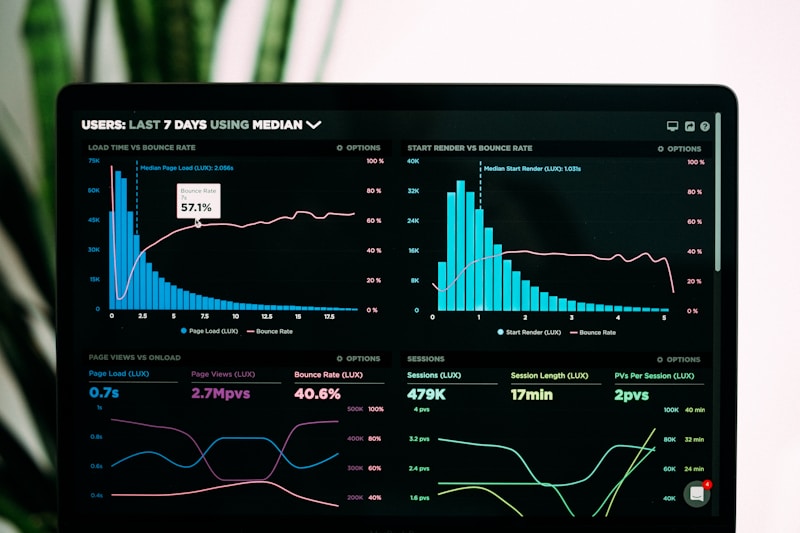
Phase 3 — Compounding: Where AI App Building Goes After 2027
The first two phases are, in essence, about parity: an AI-built app should be able to do everything a hand-coded app can do. Phase 3 is where the category stops being a mimicry of traditional development and starts becoming something new.
Multi-agent teams inside the builder
The current shared chat, live-syncing collaborator prompts and avatars, points at where this is going. In 2027 the "collaborators" won't all be human. Specialized agents — a Design agent that critiques screens against the theme, a QA agent that writes and runs Detox tests for every change, an SEO/ASO agent that owns store metadata — will operate on the project in parallel, each with its own scope and a shared editor view. This is not "one big LLM does everything." It's a team, in the ordinary sense of the word, with roles.
Feedback-conditioned generation
Every user edit today is a data point about what the AI got wrong or what the person actually wanted. In 2027 that becomes the primary lever on generation quality. Not fine-tuning in the old sense — closer to a live memory the model consults per project and per user, so a designer's second app inherits the taste they demonstrated in their first, without them having to re-prompt it. This is the practical form of "the AI knows your product," and it's the difference between a builder that feels new every session and one that compounds.
On-device AI inside the generated apps
The AI that generates the app is one thing; the AI that runs inside the shipped app is another. In 2027 the two converge. RapidNative-generated apps will have first-class support for on-device inference — transcription, semantic search, image classification, small assistants — using Apple Intelligence, Gemini Nano, and the emerging cross-platform runtimes. From the prompt author's perspective, "add a voice memo screen with local transcription and semantic search" should be one sentence, not a research project.
One-shot backend evolution
Today, changing a database column in a generated app is a coordinated dance: migration, seed update, TypeScript regeneration, client refactor. Phase 3 flattens that into a single prompt-driven operation with real Postgres validation before anything writes. The SQL-first database layer landed in 2026 to make this possible; 2027 makes it feel routine.
What We're Deliberately Not Building
Every roadmap is also a list of things you refuse to do, and readers deserve honesty about it.
- Not building: web app generation. RapidNative-generated apps do ship as installable PWAs, and that stays. But the tool will not become a general web-app builder. There are excellent web-first tools already — Lovable , Bolt, v0 — and users who need a web app should use those; users who need a mobile app should use us. The Lovable-to-App-Store bridge exists precisely so you don't have to choose upfront.
- Not building: generic bare-React-Native support. The fullstack template runs on Expo. That's a deliberate call, explained at length elsewhere: Expo owns the pain that AI is worst at (native modules, build config, updates), which is exactly the pain you don't want a generated app to eat.
- Not building: a marketplace of user-submitted plugins. Not yet. The reason is quality — a plugin ecosystem you can't audit will regress the "code you can trust" promise faster than it grows the platform. When it happens, it will be a curated library, not an open store.
Being clear about this list matters because the AI app builder future has to be readable, and a tool that will "eventually do everything" is unreadable.

What This Means If You're Building on RapidNative Today
Roadmaps are only useful if you can act on them. Three concrete implications:
If you're a founder validating an idea: the fastest thing you can do is ship a real monetized version now, not wait. v2.11 already gives you paywalls, push, and analytics-adjacent primitives. Waiting for H1 2027 to start is a year of learning you don't get back. Start with a prompt or a PRD, spend $100 on ads, learn.
If you're a product manager on a team: the shared-chat editor is the thin end of a much bigger wedge. As multi-agent teams land in 2027, the ratio of "PM writing a spec" to "engineer implementing it" changes shape. The specs stop being handed off; they get executed directly against the codebase, with a QA agent already writing tests. Get comfortable now.
If you're a developer: the code produced by RapidNative is TypeScript, React Native, and Expo you can read, own, and fork. The roadmap doesn't change that — if anything, it hardens it, since Phase 2's analytics/retention/remote-config work only makes sense if the code is legible enough to audit. The "black-box builder" concern is not the shape of the AI app builder future we're building toward.
Frequently Asked Questions
What is the future of AI app builders in 2027?
The 2027 direction for AI app builders centers on three shifts: from screen generation to full production shipping (with monetization, native SDKs, and store submission built in), from single-agent generation to multi-agent teams that specialize in design, QA, and store optimization, and from apps that only use AI to apps that contain AI, with on-device inference for transcription, search, and assistants.
Are AI app builders ready for production apps yet?
As of late 2026, yes — with caveats. Tools like RapidNative now generate apps with real in-app purchases, crash reporting, push notifications, and native auth, all wired through production SDKs rather than mocks. The remaining gap is direct App Store submission, sophisticated retention loops, and enterprise-scale features like remote config, all of which land through 2027.
Will AI app builders replace mobile developers?
No — they change what developers do. Boilerplate work compresses; judgment work grows. Developers become the people who define system boundaries, audit generated code, own the tricky integrations, and design the architecture. The comparison studies we've run consistently show teams shipping more with fewer people, not fewer teams overall.
Where This Leaves the Category
Twelve months ago, most people would have described AI app builders as impressive but unserious — a clever way to produce a prototype for a pitch deck. Twelve months from now, the honest description will be the opposite: this is how competitive mobile product teams build. The prototypes ship. The prototypes get paid. The prototypes get updated with a prompt.
The 2026–2027 roadmap is what closes that gap. Every phase compounds on the last; every capability makes the next one cheaper to add. The AI app builder future isn't a single feature dropping in Q3 2027 — it's the accumulation.
If you want to be part of the compounding, start a project and ship something small this week. Twenty free credits, no card. The roadmap is more fun when you're inside it.
Ready to build your app?
Turn your idea into a production-ready React Native app in minutes.
Free tools to get you started
Free AI PRD Generator
Generate a professional product requirements document in seconds. Describe your product idea and get a complete, structured PRD instantly.
Try it freeFree AI App Name Generator
Generate unique, brandable app name ideas with AI. Get creative name suggestions with taglines, brand colors, and monogram previews.
Try it freeFree AI App Icon Generator
Generate beautiful, professional app icons with AI. Describe your app and get multiple icon variations in different styles, ready for App Store and Google Play.
Try it freeFrequently asked questions
What is RapidNative?
RapidNative is an AI-powered mobile app builder. Describe the app you want in plain English and RapidNative generates real, production-ready React Native screens you can preview, edit, and publish to the App Store or Google Play.
Can I export the code?
Yes. RapidNative generates clean React Native and Expo code that you can export at any time. No lock-in, no proprietary format. Hand it to your developers or keep building inside RapidNative.
Is RapidNative free to use?
Yes. You can build apps on the free plan with no credit card required. Paid plans unlock unlimited AI generations, code export, and direct publishing to the App Store and Google Play.
Do I need to know how to code?
No. Most users build apps by describing what they want in plain English. Developers can drop into the code whenever they want more control, but coding is optional.
How long does it take to build an app?
Most users have a working first screen in under a minute. A full MVP usually takes a few hours instead of the weeks or months traditional development requires.